Hearing well is a vital part of staying socially connected, independent, and healthy as we age. Yet, hearing loss often develops gradually and may go unnoticed until it starts to affect daily life. In Singapore—where the population is ageing rapidly—this issue is becoming increasingly important. This article explores how hearing loss impacts older adults, who may benefit from hearing aids, and how today’s advanced hearing technologies can make a meaningful improvement in quality of life.
Ageing Population and Hearing Loss in Singapore
Singapore is ageing rapidly, and hearing loss has become one of the most common health concerns among seniors. Nearly one in five residents has reached age 65 and above, and this will rise to one in four by 2030. Studies show that more than six in ten older adults elderly experience hearing difficulties, with over 100,000 living with disabling hearing loss.
Who Needs Hearing Aids? How Much Do They Help?
1. Types of Hearing Loss
Sound travels from the outer ear through the middle ear and into the inner ear, where it is converted into electrical signals and processed by the brain. Hearing loss is commonly classified as:
Conductive hearing loss: caused by issues in the ear outer or middle ear, usually with good improvement using hearing aids.
Sensorineural hearing loss: caused by damage to the inner ear or auditory nerve, with varied hearing aid outcomes.
Mixed hearing loss: a combination of both, requiring more careful evaluation.
With the right hearing aid, individuals can regain clarity in communication and reduce further decline in auditory processing.
2. Severity of Hearing Loss
Hearing loss is measured in decibels (dB) and is categorized as:
Mild (26–40 dB)
Moderate (41-70 dB)
Severe (71-90 dB)
Profound (>90 dB)
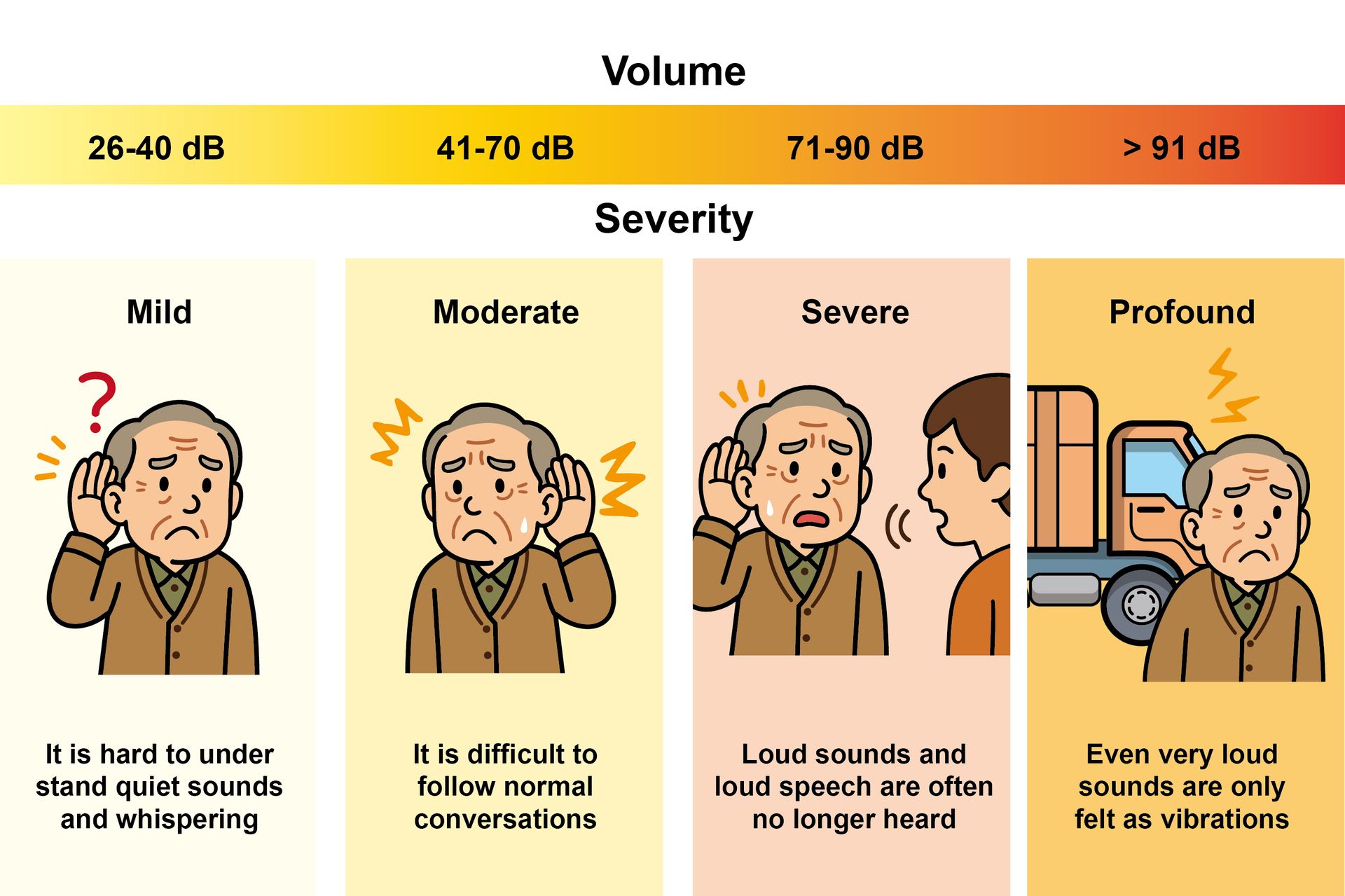
In the past, mild hearing loss was often overlooked. Today, with advances in hearing aid technology and greater emphasis on quality of life, even those with mild hearing loss can benefit significantly from early use intervention of hearing devices. For those with profound loss, the benefits may be more limited, but professional evaluation remains key to finding the best solution.
The Evolution of Hearing Aid Technology
Modern hearing aids have evolved from simple amplifiers to highly sophisticated, personalized devices. Today’s hearing aids offer features designed to meet diverse needs, such as:
Open-fit ventilation design
Eliminates the occlusion effect / the blocked-ear sensation common with older devices, allowing for more natural sound perception.Compact and discreet appearance
New models are tiny and lightweight, It can be as small as your fingertip. Making them almost invisible to others and you may not even feel it in your ear.Binaural communication
Hearing aids nowadays can “talk” to each other, automatically selecting and amplifying the most useful sounds, making conversations clearer even in noisy environments.Bluetooth and wireless connectivity
Beyond sound amplification, hearing aids serve as smart communication hubs. They connect seamlessly to mobile phones, TVs, computers, and GPS systems, enriching everyday life and keeping users connected to the digital world.
These innovations not only improve hearing but also enhance social participation, independence, and overall well-being—helping users live healthier and more fulfilling lives.
The takeaway
As Singapore’s population ages, addressing hearing health is a critical part of supporting active ageing. With over half of seniors experiencing hearing difficulties, early screening, timely intervention, and the adoption of modern hearing aid technology can help elderly stay connected with their families and communities, leading to a fulfilling and healthier life.