Taking the first step towards better hearing can feel unfamiliar, but you’re not alone. At Clinico Hearing Solution, our caring teams are here to guide you through every stage of your journey—ensuring the process is clear, comfortable, and tailored to your needs.
1. What Happens During a Hearing Consultation?
The main objective of your first consultation is to help us understand your unique hearing needs. Our hearing care professional will:
Ask about your lifestyle, medical history, and hearing concerns.
Perform a comprehensive ear examination.
Conduct a series of hearing tests in a quiet, controlled environment.
Share your results and explain them in an easy-to-understand way.
This process usually takes about 30 minutes. Our goal is not just to measure your hearing level , but to help you see the bigger picture of how hearing affects your daily life and relationships.
2. The Hearing Consultation Process
To give you a clear overview, here’s what typically happens during your consultation:
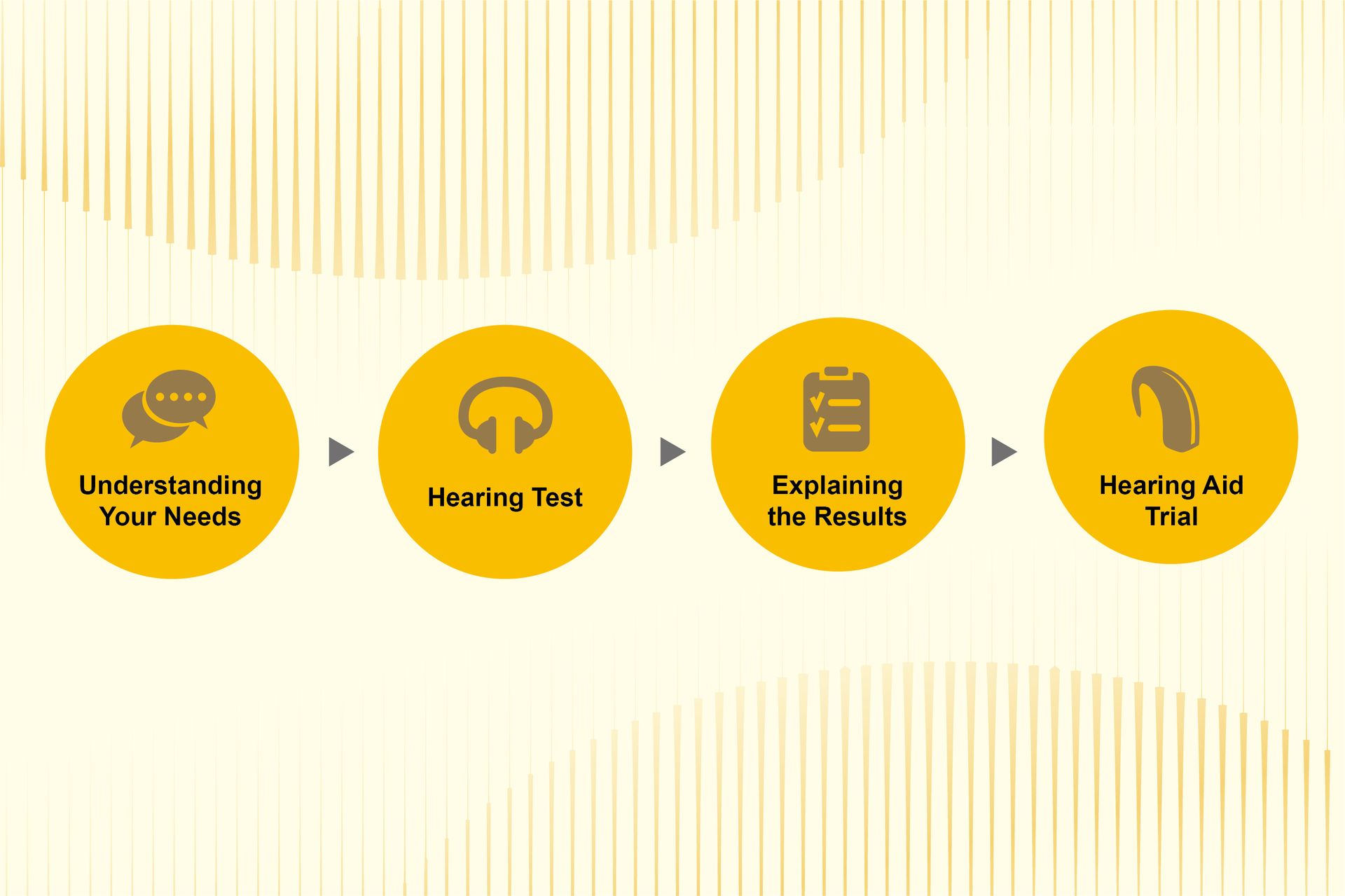
👉 Understanding Your Needs – The audiologist will first review your hearing history, discuss factors affecting your hearing, and share information relevant to your hearing needs.
👉 Hearing Test – You will undergo a comprehensive hearing assessment. In some cases, you may also experience a short hearing aid trial to understand how amplification feels.
👉 Explaining the Results – Your audiologist will clearly explain the outcome of your hearing evaluation, ensuring you understand what the results mean.
👉 Hearing Aid Trial – If hearing loss is identified, the audiologist will recommend suitable hearing aids and allow you to try them based on your hearing condition.
3. Why Shall I Bring a Family Member Along?
We encourage you to bring your loved one to your consultation. Having a family member present helps in two ways:
Support & Comfort – They can share observations about your hearing that you might not notice.
Shared Understanding – They will also learn how hearing loss impacts communication and how solutions can strengthen family bonds.
Hearing care goes beyond the individual—it’s about staying connected to the people who matter most.
4.How the Brain Processes Sound
Hearing involves more than just the ears—your brain plays a crucial role. When hearing loss goes untreated, the brain receives fewer sound signals and gradually reduces its ability to process them. This is why people with untreated hearing loss often report difficulty understanding speech, especially in noisy places.
5. The Risks of Ignoring Hearing Loss
Untreated hearing loss is more than an inconvenience—it can impact your health and well-being:
Increased risk of social withdrawal and isolation.
Greater difficulty in communication at work and in daily life.
Scientific studies show that untreated hearing loss can increase the risk of dementia by up to 5 times.
By addressing hearing issues early, you not only improve your communication but also protect your long-term brain health.